
What HTTPS Verifies on an Online Poker Site
Published by WhatsMyIP.com ·
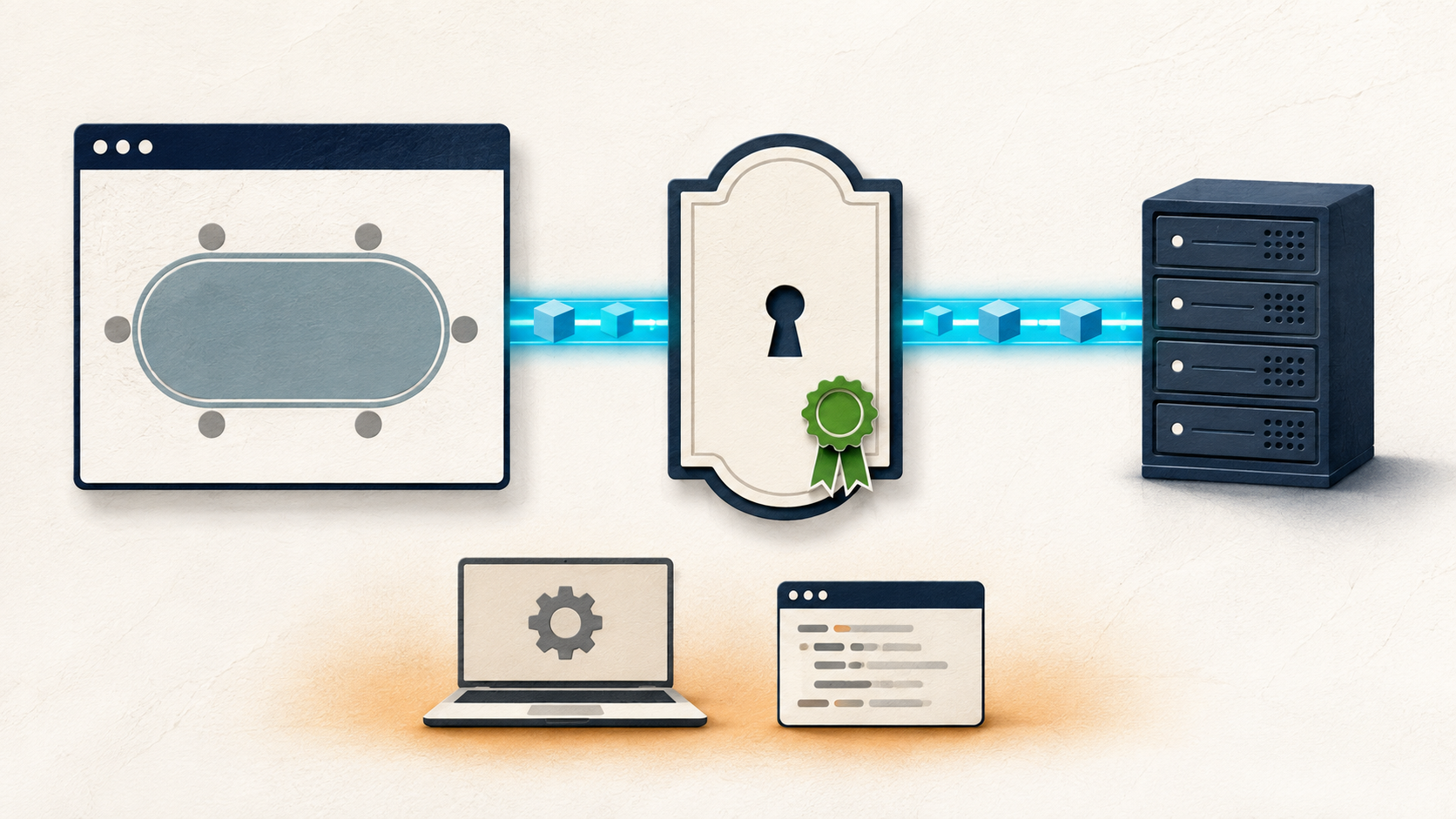

Before an online poker page can submit a sign-in form or refresh a hand, the browser must establish a protected connection with the server named in the address bar. HTTPS checks the server’s certificate, confirms that the certificate covers the requested domain, and creates encryption keys for the session. It also detects if protected data is altered while traveling between the browser and server. These checks apply to the connection and the endpoint. They do not assess poker rules, game quality, or the condition of the player’s device.
In June 2025, SecurityScorecard reported that about 98% of US internet traffic used HTTPS, based on Google data from April that year. Plain HTTP sends web traffic without TLS protection, leaving its contents readable to intermediaries along the route. Modern HTTPS uses Transport Layer Security, or TLS. During the handshake, TLS authenticates the server, agrees on temporary encryption keys, and sets up integrity checks for later traffic. The browser accepts the protected connection only after those initial checks succeed.
What Happens Before the First Poker Action
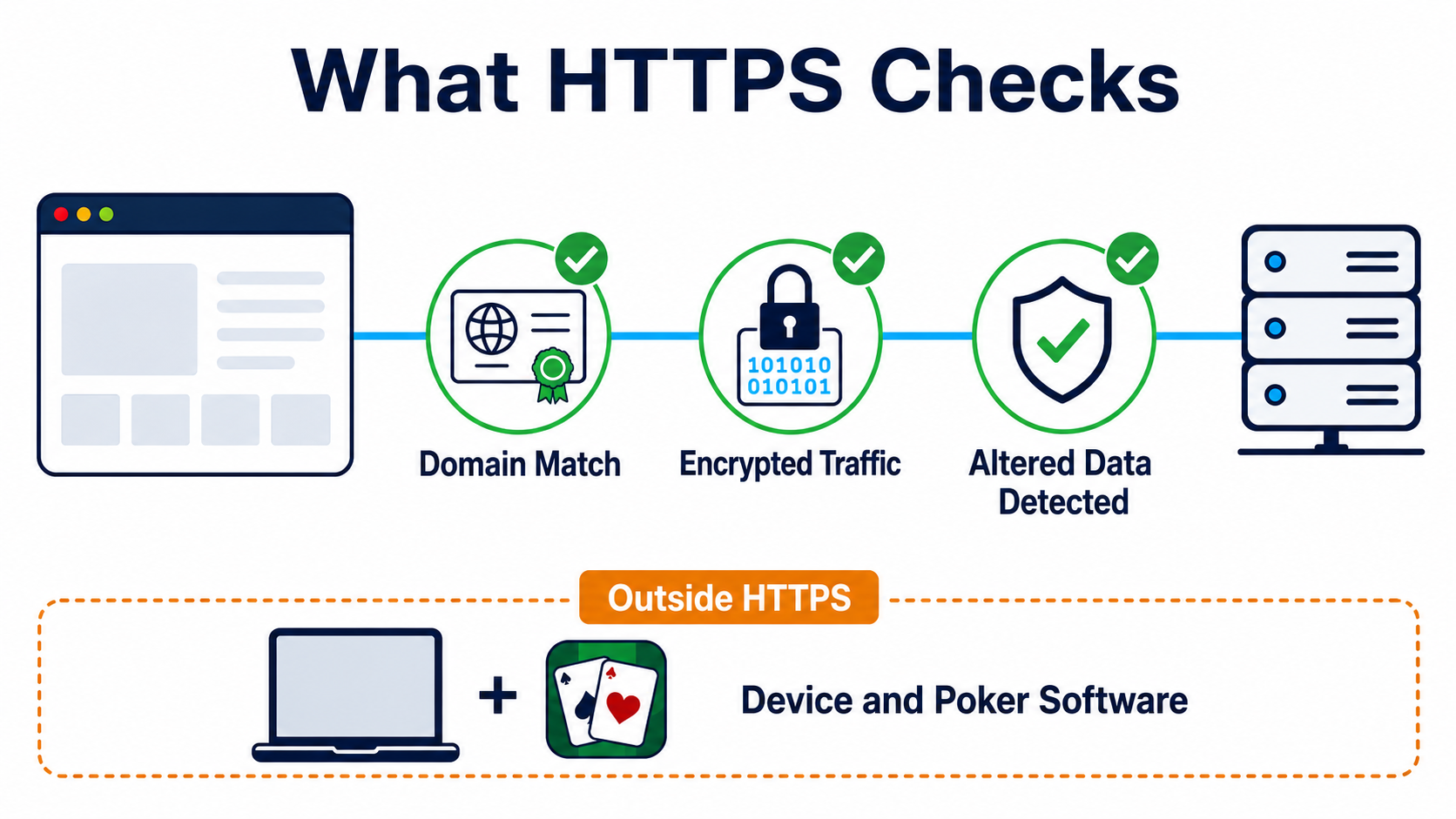
An Australian recreational player starting an online poker session creates a rapid sequence of exchanges between the browser and the poker server. The first page request asks for the table or account screen. A sign-in submission carries entered details. Once play begins, a fold, call, check, or raise sends another instruction, and the table returns an updated hand state. When the requested poker destination is Ignition Australia, the browser compares the certificate’s domain names with the address before allowing that protected session to proceed. It then uses the keys created during the TLS handshake to encrypt data traveling in both directions.
Integrity checks allow altered records to be rejected rather than accepted as valid instructions. The same protection continues as later poker actions and table updates cross the connection. HTTPS does not inspect whether a decision at the table was sensible, verify the rules being displayed, or examine software elsewhere on the device. Its assurance remains limited to the requested endpoint and the data moving through that browser session.
Domain matching depends on the exact address requested. A mistyped address can lead to a different domain that has its own valid certificate. In that case, HTTPS may protect the connection while authenticating a destination the player never intended to reach. The browser does not know which poker address the player meant to type; it validates only the address it received. Checking the spelling before entering account details therefore remains a separate step.
A certificate warning creates the opposite problem: the browser cannot confirm the expected relationship among the address, certificate, validity dates, and trusted issuer chain. Proceeding would remove the assurance that the identity check completed normally.
What HTTPS Leaves Unchecked
HTTPS does various things. Server authentication matters because encryption to the wrong endpoint would still protect traffic while delivering it to the wrong server. Certificate authentication means the certificate covers the domain requested by the browser and traces through a trusted certificate chain. Encryption makes the contents of requests and responses unreadable to a passive observer while they cross the network. Integrity protection detects changes to those protected records before the receiving side accepts them.
TLS protection ends when data reaches either endpoint. Encryption cannot stop a compromised browser extension from reading information before it is encrypted or after it is decrypted. A valid certificate does not check poker software, evaluate statements on the page, or examine the device for malicious programs. Integrity protection can detect a changed instruction in transit, but it cannot decide whether an instruction delivered unchanged was accurate in the first place.
Certificate details can be inspected instead of inferred from the HTTPS indicator. The SSL Certificate Checker reports the domain names covered by a certificate, its validity dates, its issuer chain, and the protocol versions supported by the server. SSL remains common wording in tool names, although current secure web connections use TLS. A matching domain and complete chain address endpoint identity. The expiration date sets an outer limit, although revocation or trust changes can invalidate the certificate sooner.
Why Certificates Expire
A browser validates a certificate each time it establishes a new connection because certificate status can change. A certificate may expire, be replaced, or lose its trusted status. In a 2026 technical notice, DigiCert set a 199-day maximum for its public TLS certificates issued from February 24. DigiCert uses 199 days, one day below the industry maximum, to avoid exceeding the permitted limit. The notice also records the schedule for reducing maximum public certificate lifetimes to 100 days in 2027 and 47 days in 2029.
Shorter lifetimes require site operators to renew certificates more often without expanding what each certificate proves. Before each poker session, the browser repeats the domain, date, and trust-chain checks against the certificate then presented. When those checks succeed, protected traffic can begin with the requested endpoint. If the browser displays a certificate error, the poker session should wait until the address and certificate validate normally.